

Starting with the precise cause
Dry eye syndrome,
managed with tailored treatment
We precisely assess your tear film, meibomian glands and eye surface,
and help your eyes feel comfortable with treatment matched to the cause
What is dry eye syndrome?
A condition in which an unstable tear film causes a variety of uncomfortable symptoms.
Dry eye syndrome occurs when there are too few tears or they evaporate too quickly, upsetting the balance of tear components, damaging the eye surface and causing unpleasant symptoms.
It is easy to dismiss as simple dryness, but it is one of the most common eye conditions, experienced by over 75% of Korean adults.
- Dryness · Foreign-body sensation
- Stinging · Redness
- Eye fatigue · Blurred vision

What causes dry eye syndrome?
Several factors can act together, including tear production and evaporation, eyelid function and your environment.

Reduced Tear Production
The eyes cannot produce
enough tears.
Increased Tear Evaporation
The tear film
evaporates too quickly.
Meibomian Gland Dysfunction
When the meibomian glands, which secrete
the oil layer that prevents evaporation,
don’t work well, tears evaporate easily.
Environment & Lifestyle
Prolonged smartphone or computer use
and dry indoor environments
can play a role.
What are the symptoms of dry eye syndrome?
Besides dryness, you may experience a foreign-body sensation, stinging, redness, fatigue and temporarily blurred vision.
- My eyes feel dry and gritty
- It feels like there is sand in my eyes
- My eyes sting or burn
- My eyes easily get red or tired
- My eyes actually water often
- My vision is dim or temporarily blurry
- Symptoms worsen after long screen time
What makes the BGN Dry Eye Center different?
We provide care tailored to your eye condition, backed by advanced diagnostic and treatment equipment.
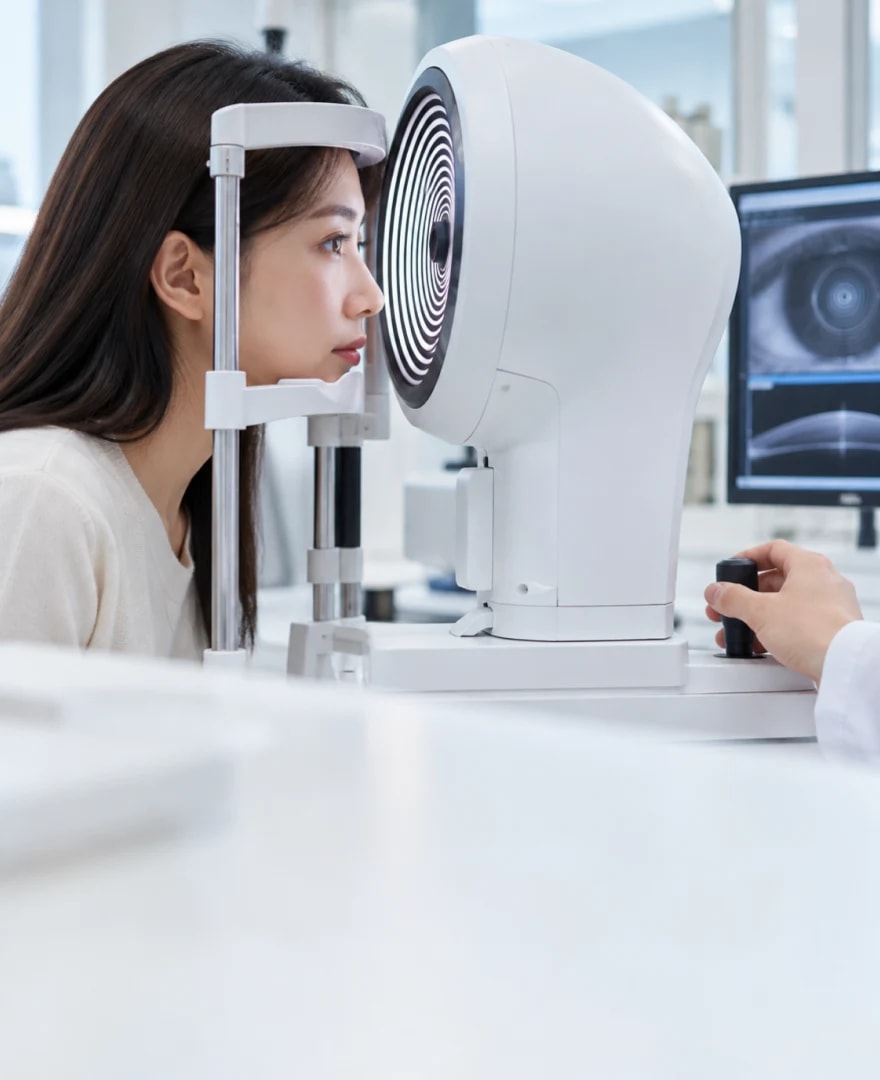
Detailed Dry Eye Examination
The K5M (Keratograph 5M) examines the tear film,
eye surface and meibomian glands from multiple angles
to identify the cause and severity.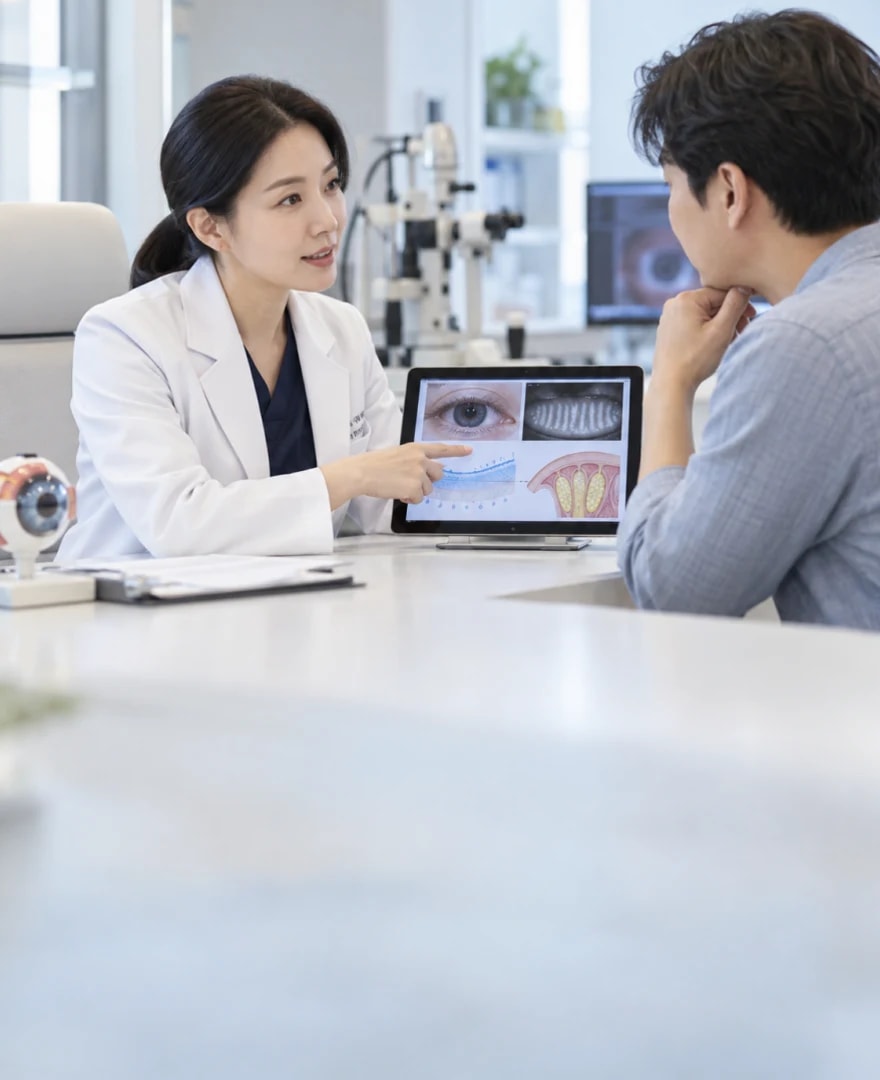
Treatment Matched to the Cause
Based on test results, we determine a treatment plan
matched to the cause, such as tear film instability
or meibomian gland dysfunction.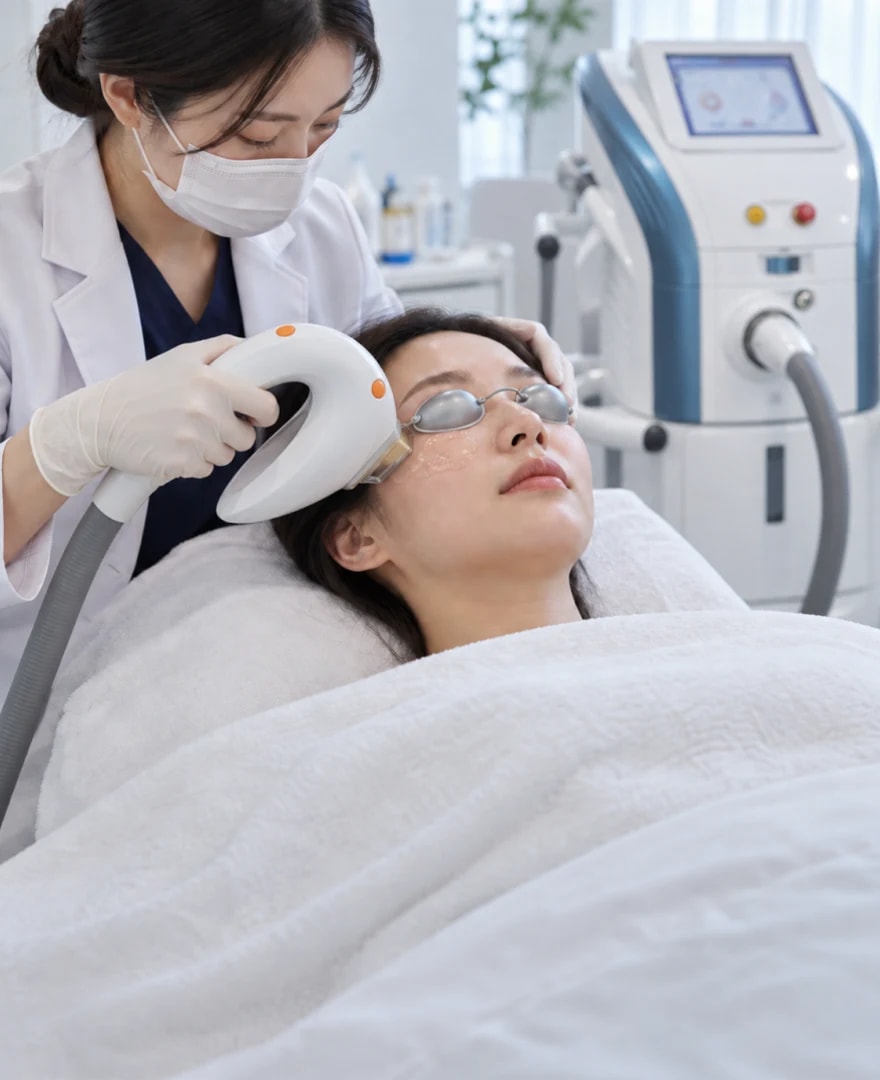
Intensive Care with Treatment Devices
Using treatment devices such as the Lumenis M22,
we provide treatment according to the cause.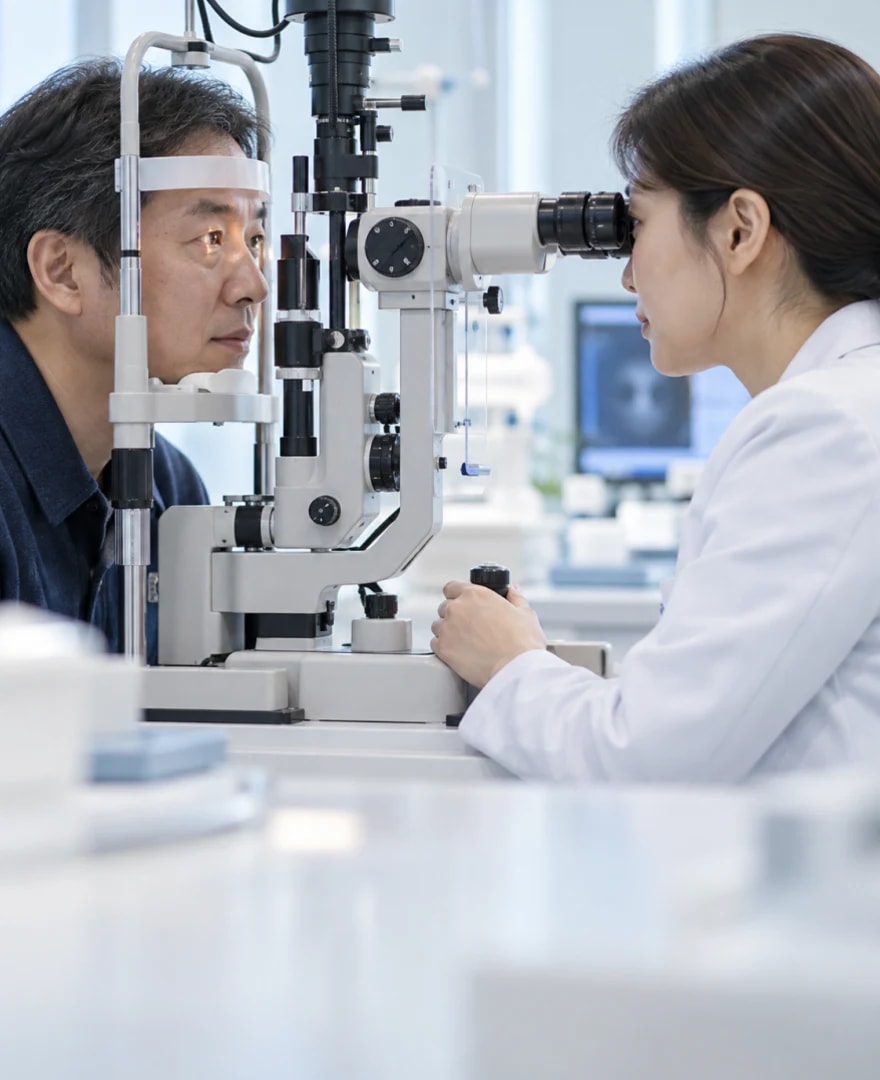
Ongoing Care After Treatment
Even after treatment, we continue to monitor
your tear film and eye surface.
Frequently Asked Questions
Yes. When the eye surface is dry or irritated, reflex tearing can occur to compensate, producing more tears.
So watery eyes do not rule out dry eye syndrome.
Yes. The tear film keeps the corneal surface smooth for clear vision. When it becomes unstable, vision can temporarily feel blurry or hazy.
Looking at screens for a long time reduces blinking, which increases tear evaporation and can easily dry the eye surface. Prolonged screen use can worsen dry eye symptoms.
Yes. Dry weather, wind and air conditioning or heating dry the environment and increase tear evaporation, which can worsen symptoms. Keeping indoor humidity at a suitable level and avoiding direct airflow to the eyes can help.
Symptoms caused by a temporary environment or habits may ease once the environment improves and the eyes are rested. But if symptoms recur or persist, there may be another cause, so an accurate examination is recommended.
The course of dry eye varies by cause and condition, and symptoms can improve and then return. Beyond relieving symptoms, identifying the cause and managing it consistently is important.