

Comprehensive Eye Exam · Macular Degeneration
Macular degeneration: protecting your central vision
Symptoms may not be obvious in the early stages, so regular eye exams are needed to check the macula.


What types of macular degeneration are there?
Macular degeneration is divided by form into non-exudative (dry) and exudative (wet) types.
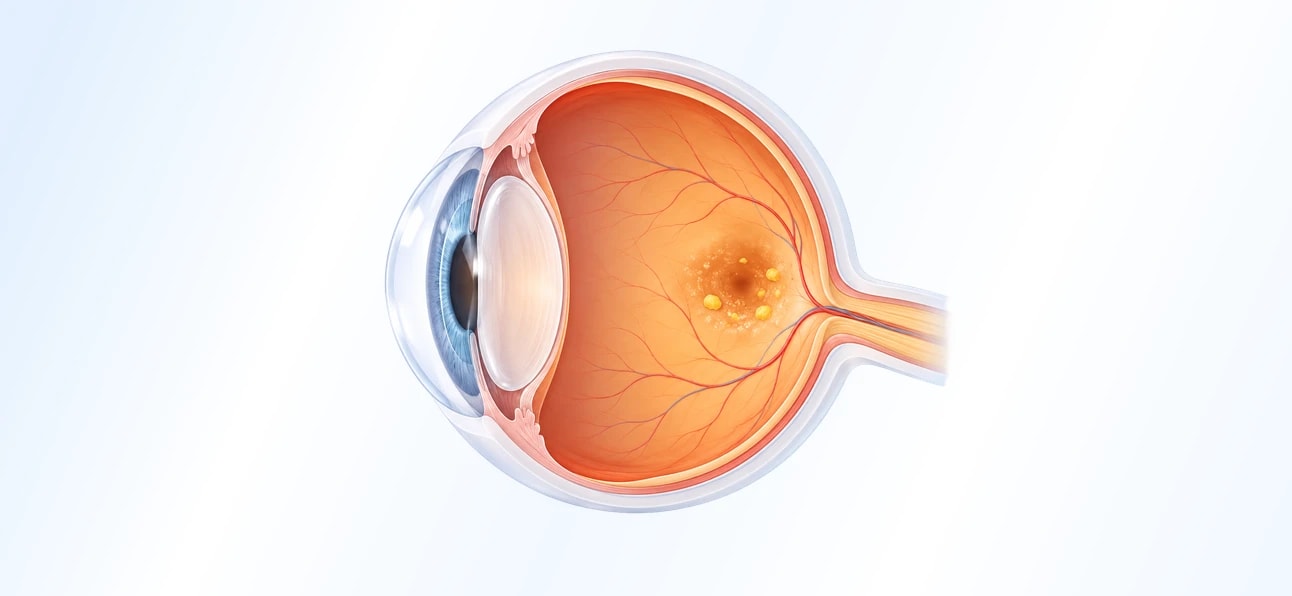
Non-exudative (Dry) Macular Degeneration
The most common type, in which yellow deposits called drusen appear in the retina.
It progresses relatively slowly but can turn into the wet type, so regular monitoring is needed.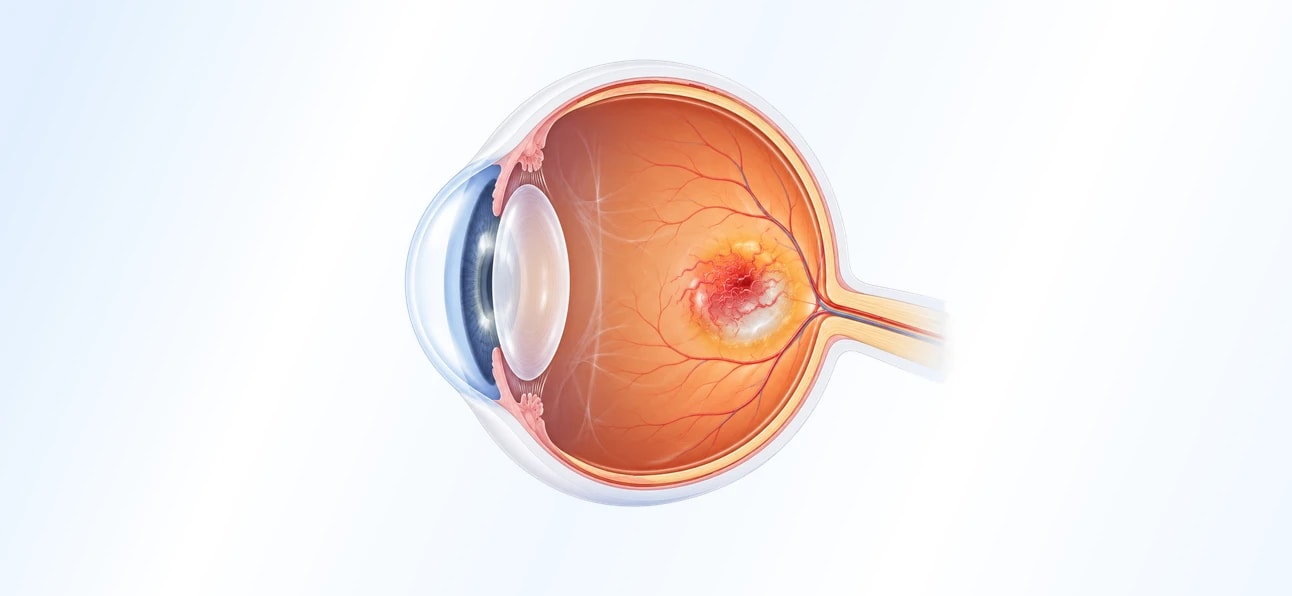
Exudative (Wet) Macular Degeneration
Abnormal new blood vessels grow beneath the retina, causing bleeding or leakage.
Vision can decline rapidly, so early diagnosis and treatment are important.
What are the symptoms of macular degeneration?
If your vision seems different from usual, have your macula checked.
Gaps in Text or Objects
Parts of words are missing when reading a newspaper or book.
Empty Center
The center of what you look at seems blocked or empty.
Distorted Objects
Objects look misshapen compared with reality.
Sudden Vision Loss
Your ability to distinguish shapes declines.
Wavy Lines
Straight lines such as bathroom tiles or window frames look bent.
Dark Spot in the Center
A dark spot or empty area appears in your central vision.
What causes macular degeneration?
The exact cause is unknown, but the following are known risk factors.

Age
With age, macular tissue weakens and waste builds up, increasing the likelihood of macular degeneration.

Genetic Factors
If a family member has been diagnosed with macular degeneration, your risk may be higher.

Smoking
Smoking affects blood circulation and oxygen supply to the retina and is one of the main factors that raise the risk.

High Myopia
As the eyeball elongates, the retina and macula thin, making macular changes more likely.

Cardiovascular Disease · High Cholesterol
Vascular health and blood lipid levels affect retinal circulation and can increase the risk.

Excessive UV Exposure
Prolonged exposure to strong sunlight can strain the retina and macula.
What tests are used for macular degeneration?
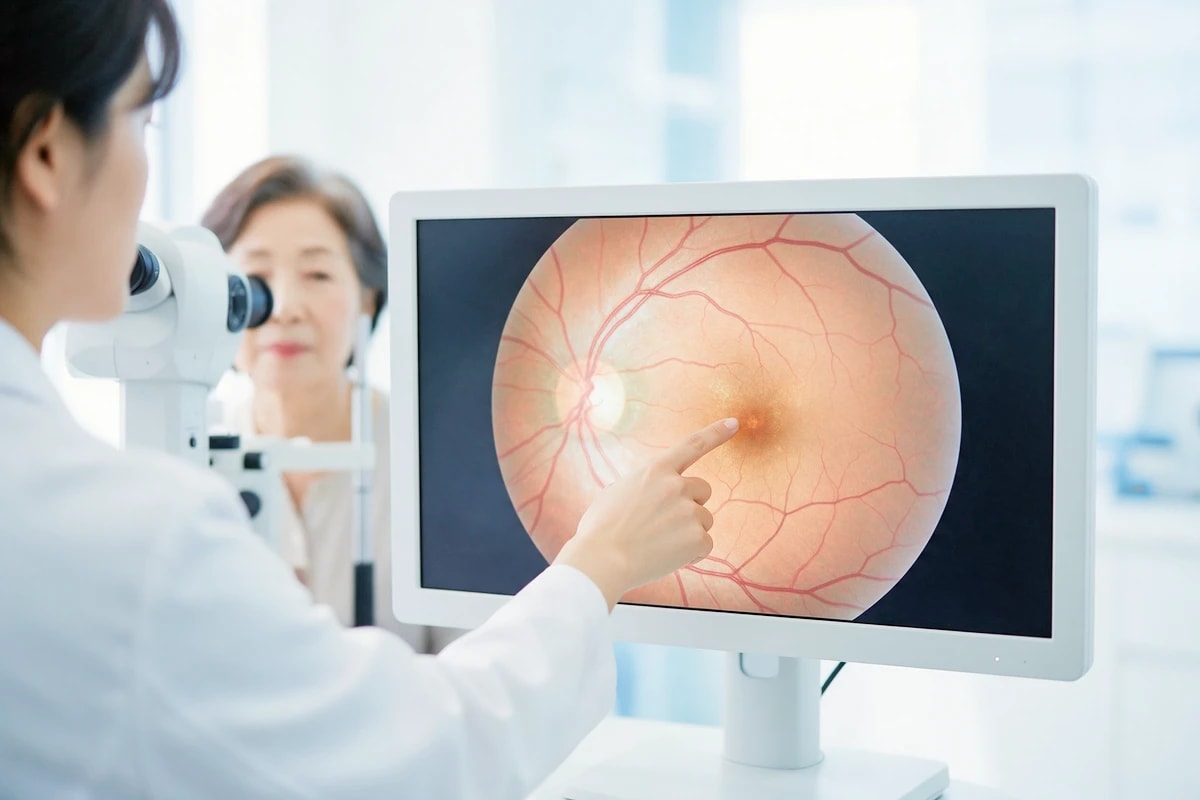
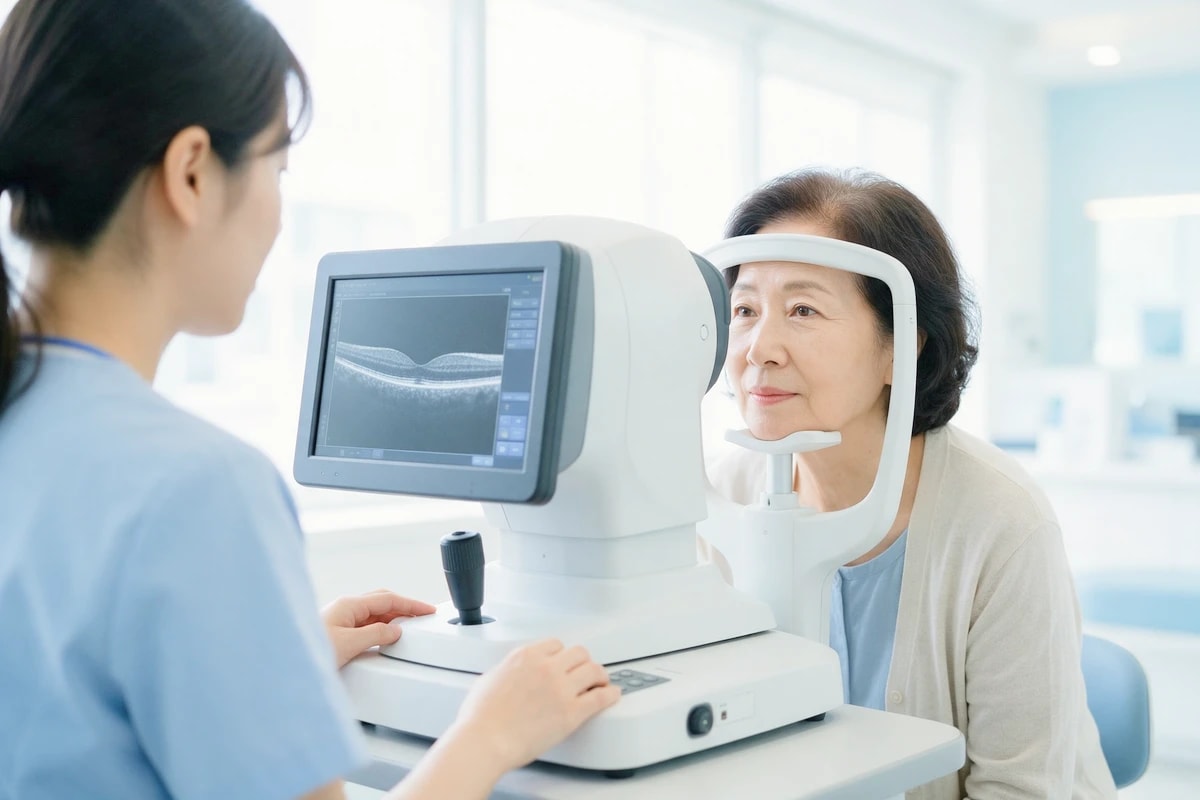
Because treatment differs by type and stage, it is important to examine the structure of the macula and the condition of its blood vessels precisely.

Vision Test · Amsler Grid Test
Checks central vision and whether objects look distorted or partly blocked.

0104
Can you check for macular degeneration yourself?
If your vision seems different from usual, try a quick check with the Amsler grid test.
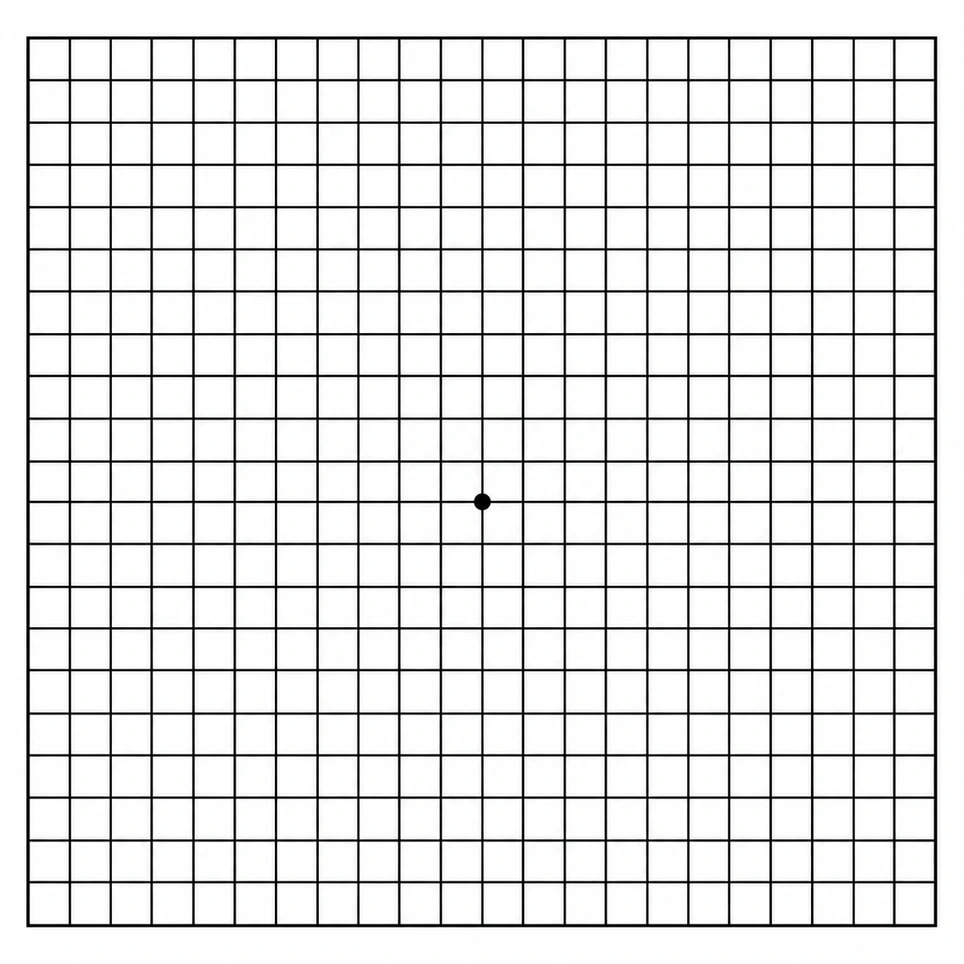
Amsler Grid Test
Normally the grid looks even, but if the macula is affected, lines may look wavy or broken and the center dot may be hard to see.
How to Test
- 01Wearing your glasses or contact lenses, cover one eye.
- 02In good light, hold the Amsler grid about 30cm away and look at the center dot.
- 03Check the other eye the same way.
If you notice these symptoms, we recommend an eye exam.
- Lines look wavy
- Dark spots appear here and there
- Lines look broken
- The center dot is hard to see
- It is hard to focus
How is macular degeneration treated?
Treatment varies depending on the type and stage of macular degeneration.


Medication
Medication is provided as needed according to the condition and stage.
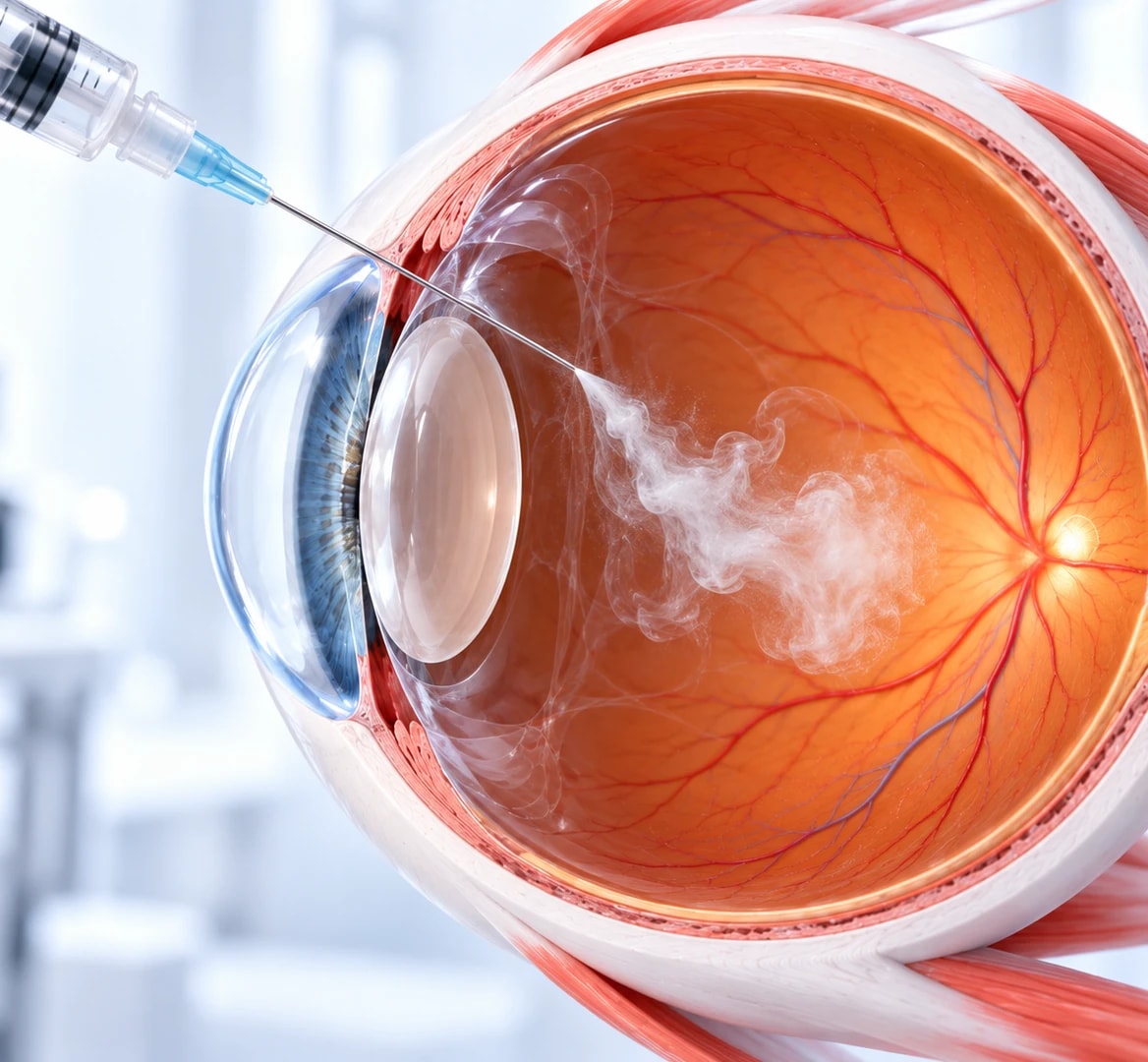
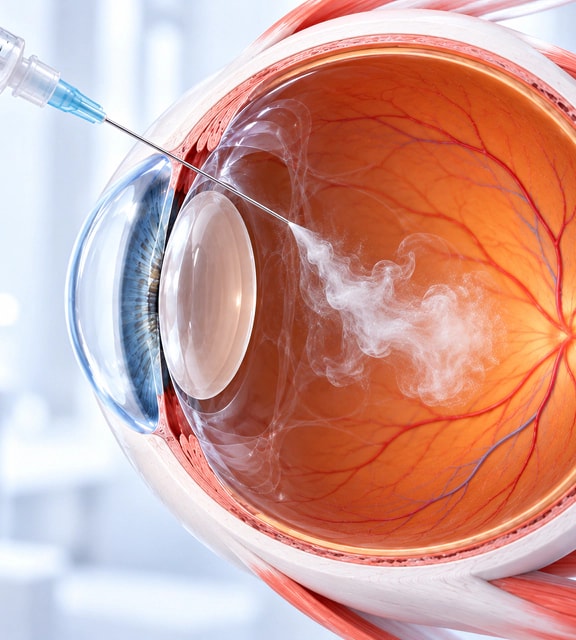
Intravitreal Injection (Anti-VEGF)
Used in wet macular degeneration to suppress the growth of abnormal new vessels and reduce bleeding and swelling.
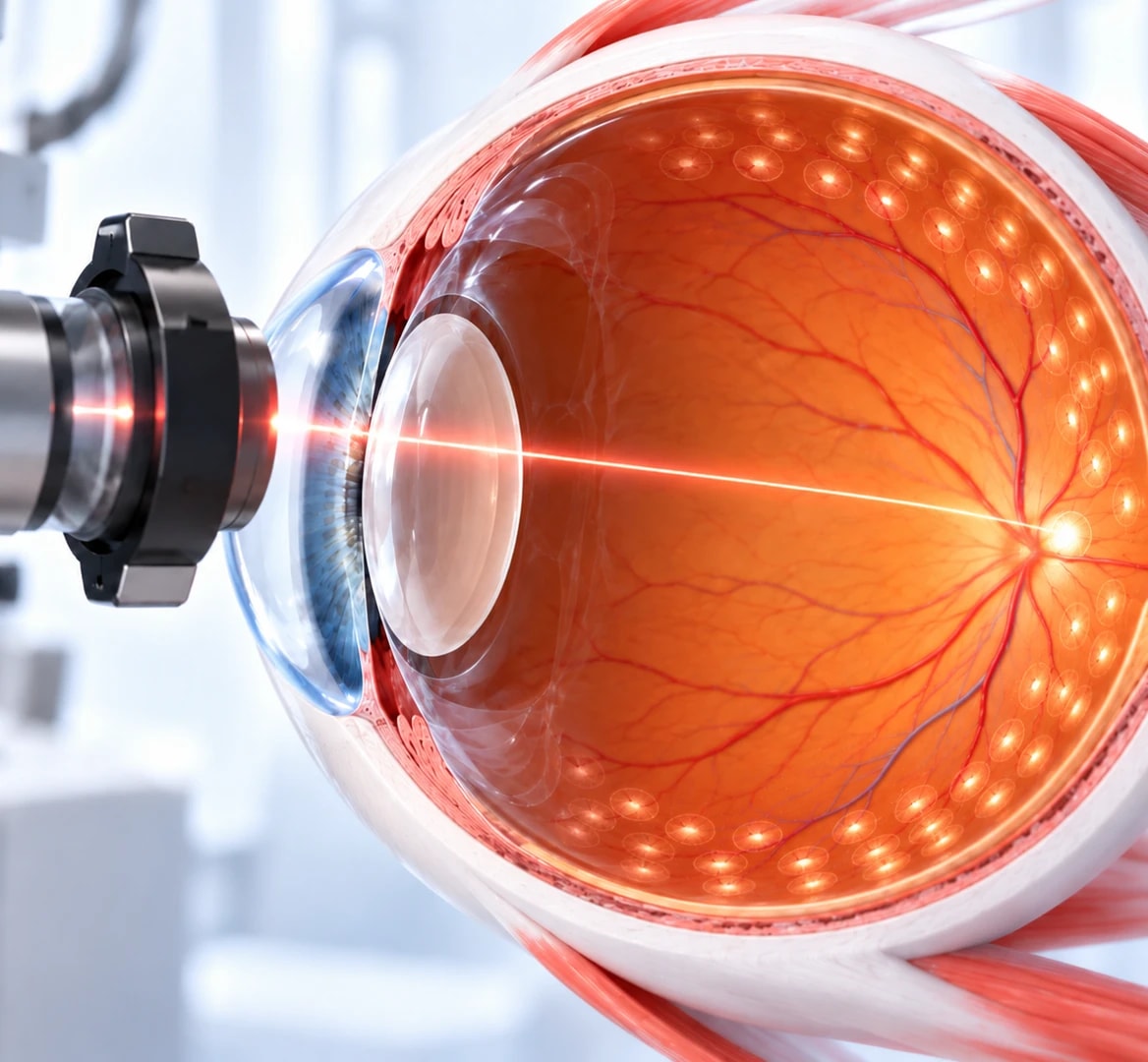
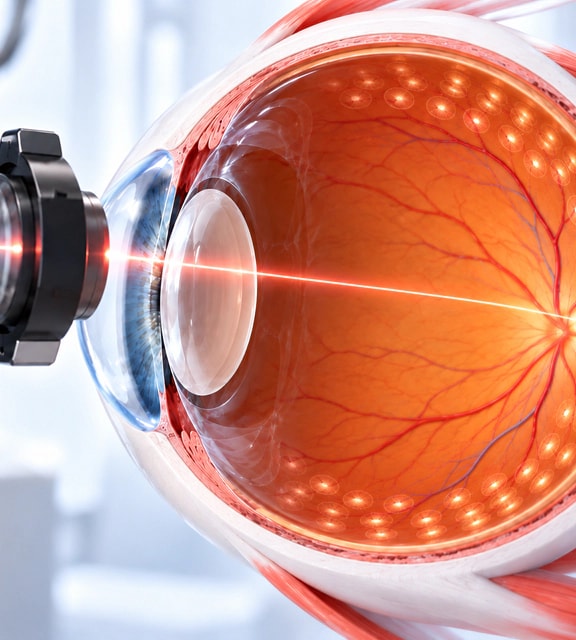
Panretinal Photocoagulation (Laser)
Abnormal retinal vessels or lesions are treated with a laser;
whether to perform it depends on your condition.
Macular degeneration care starts with an accurate exam
After accurately identifying the type and stage of macular degeneration, we decide on a treatment plan suited to your eyes.