Comprehensive Eye Exam · Floaters

Specks and threads drifting across your vision: floaters

Most are a natural change with age,
but sudden floaters can be a sign of a retinal tear or retinal detachment.


What are floaters?

Floaters are a symptom in which something seems to drift in front of your eyes due to clouding of the vitreous.
Opacities in the vitreous cast shadows on the retina, making dots, lines or bug-like shapes seem to float across your vision.
The vitreous is the clear, gel-like tissue that fills the inside of the eye; it changes naturally with age and can also become cloudy due to various eye conditions.

  • Vitreous opacity
  • Age-related change
  • Sign of retinal disease
Lakeside path and mountains seen with normal visionThe same scene with floaters — dot- and thread-like shadows drift across it

What do floaters look like?

You may notice the following in your vision.

  • City park scene with scattered fly-like specks

    Fly-like Specks

    You see specks like small flies in front of your eyes.

  • Indoor window scene with a cobweb-like shape overlaid

    Cobweb Shapes

    You see cobweb-like shapes in front of your eyes.

  • Riverside path with overlapping strand-like shadows

    Drifting Strand-like Shadows

    Strand-like shadows drift across your vision.

  • Riverside cityscape with lightning-like flashes

    Flashes of Light (Photopsia)

    You see flashes of light when opening or closing your eyes.

What causes floaters?

Besides aging, floaters can result from various causes such as high myopia or retinal disease.

  • Age-related Vitreous Changes

    As the vitreous gradually liquefies and shrinks, opacities form
    and floaters can appear.

  • High Myopia

    As the eyeball elongates, changes in the retina
    and vitreous become more likely.

  • Retinal Tear & Detachment

    When the retina tears or lifts, sudden floaters
    or flashes of light can appear.

  • Vitreous Hemorrhage

    Bleeding from retinal blood vessels
    can cause dark spots or shadows.

  • Uveitis & Other Eye Diseases

    Inflammation inside the eye can cloud the vitreous
    and cause floaters.

What tests are used for floaters?

It is important not just to confirm the symptoms but to check whether there is an actual problem with the retina or vitreous.

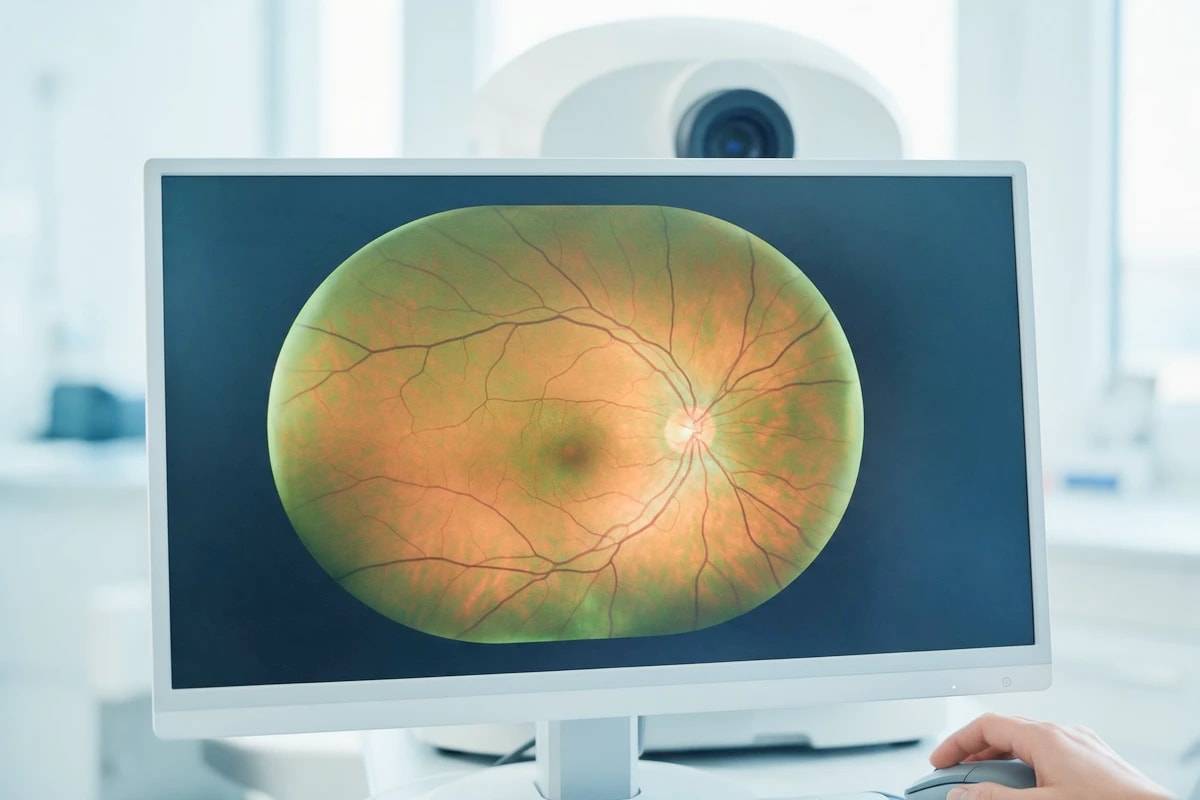
Eye drops being applied for a dilated eye exam
STEP 1

Dilated Eye Exam

The pupils are dilated to examine
the retina out to its periphery in detail.

0104

How are floaters treated?

Most are simply monitored, but if an underlying condition is found, treatment for that condition is needed.


  • Doctor sitting across from a patient in consultationDoctor sitting across from a patient in consultation

    Monitoring

    If no specific retinal disease is found,
    we check your eyes regularly and monitor changes in symptoms.
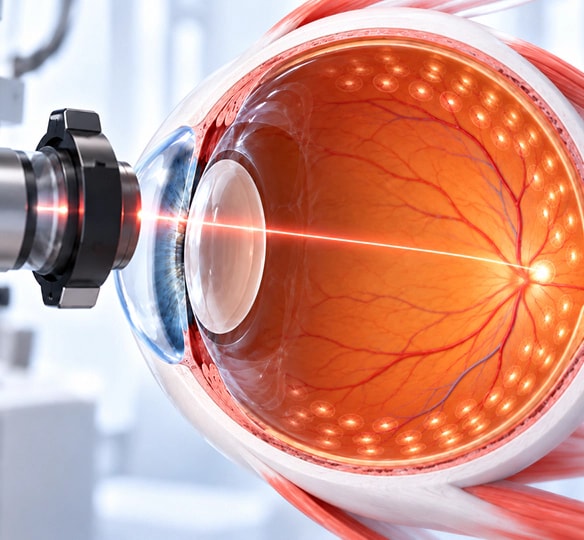
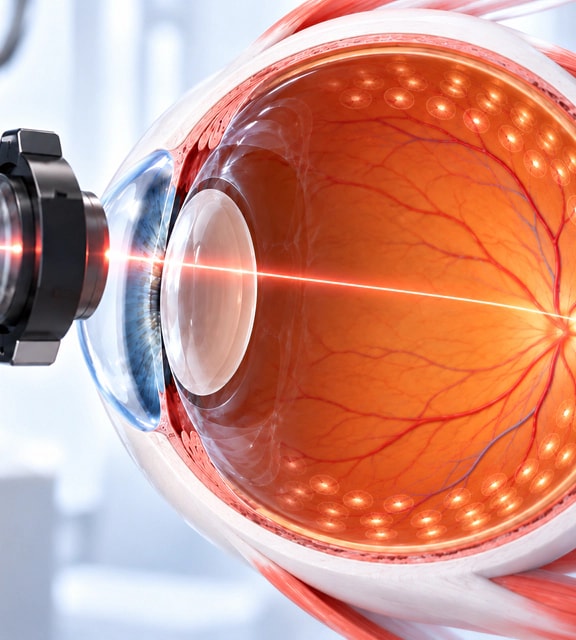
  • Illustration of a laser reaching the retina inside the eyeIllustration of a laser reaching the retina inside the eye

    Laser Treatment

    If a retinal tear is found, the area around it can be sealed with a laser
    to prevent progression to retinal detachment.


  • Eye surgery performed under a surgical microscopeEye surgery performed under a surgical microscope

    Surgery

    If treatment is needed for retinal detachment or serious vitreous problems,
    surgery may be performed depending on your eye condition.

Floaters care starts with an accurate exam

After accurately identifying the cause of your floaters and the condition of your retina,
we decide on a treatment plan suited to your eyes.

Frequently Asked Questions

Yes. Floaters can appear in one eye or in both. If they appear suddenly or worsen in one eye, it is best to have that eye’s retina checked.

Against bright, plain backgrounds such as a clear sky, a white wall or a bright screen, the shadows cast by vitreous opacities stand out more. In dark places, by contrast, they are often barely noticeable.

Even if you have had them for a long time, if you have never been examined it is best to have your retina checked. After that, keep watching for any sudden change in their number or shape.

After a dilated exam, your pupils stay enlarged for several hours, which can cause strong glare and blurry near vision. Avoid driving on the day of the exam; use public transport or come with a companion.

Having floaters does not rule out vision correction surgery. However, the retina and vitreous are checked in the pre-op examination before deciding whether surgery is possible.

Remember the number and shape of the specks or threads you usually see, and check each eye separately for changes. If they suddenly increase or come with flashes of light or a curtain over your vision, seek care right away.
+82-10-3435-5770

Closed on Sundays

Weekdays (Mon–Fri)
09:30 - 18:00
Saturday
09:30 - 17:00
Lunch Break
13:00 - 14:00
Business Name
BGN Eye Clinic Jamsil
Representative
Park Se-kwang
Business Registration No.
110-99-05290
Address
11F Lotte World Tower, 300 Olympic-ro, Songpa-gu, Seoul
Main Phone
1600-5770
Privacy Officer
Heo Seo-yun

Chat