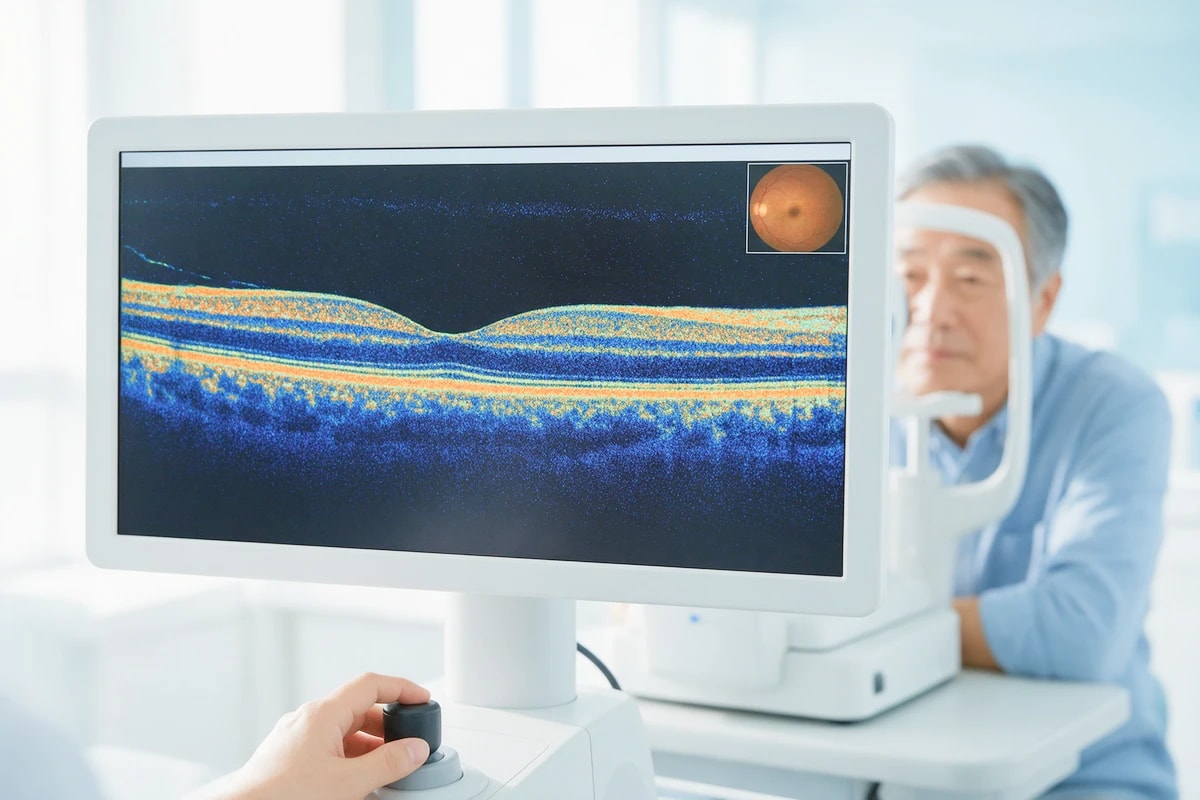
Comprehensive Eye Exam · Retinal Detachment

Retinal detachment: early detection matters

It can begin with mild symptoms such as floaters or flashes of light,
so early detection and examination are important.


What is retinal detachment?

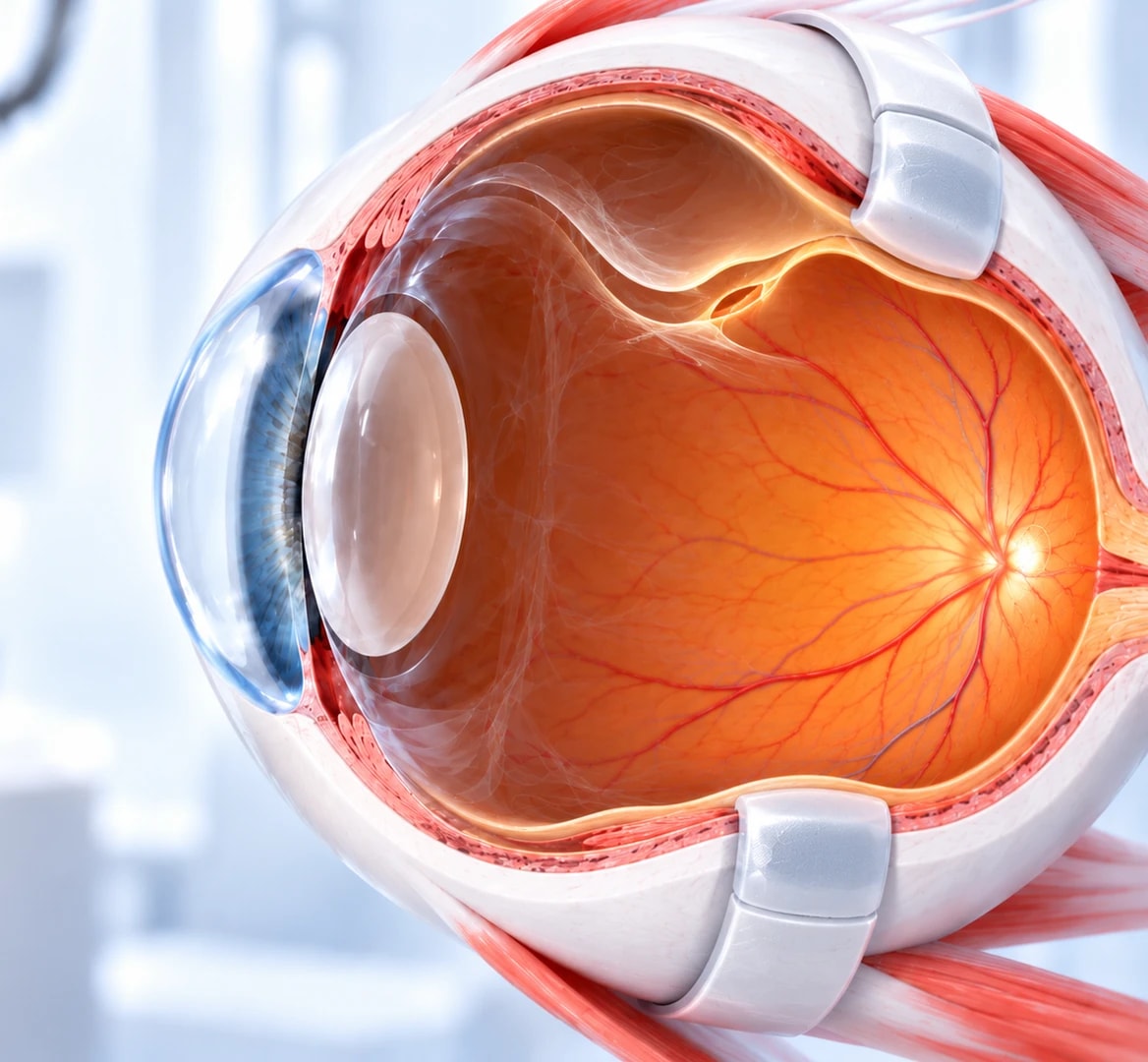
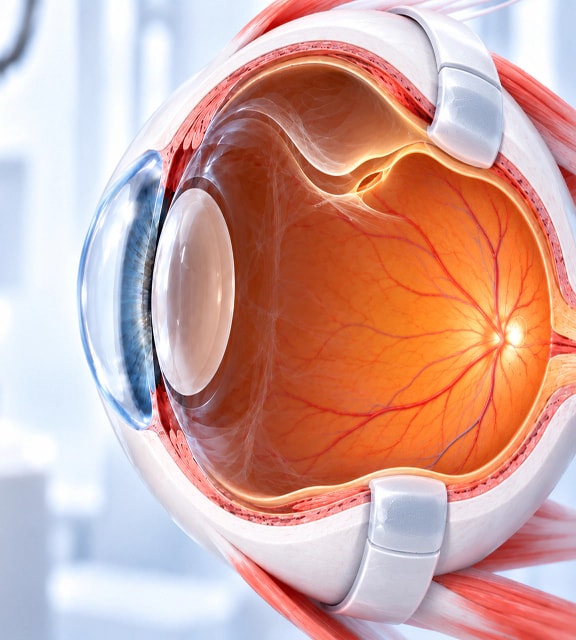
The retina is the vital tissue at the back of the eye that senses light and sends visual information to the brain.
If a hole or tear forms in the retina, fluid inside the eye can seep beneath it and cause the retina to detach.
As it progresses it can affect your field of vision and eyesight, so prompt diagnosis and treatment are important.

  • Retinal tear
  • Floaters · Flashes
  • Prompt diagnosis
A desk by the window and a riverside view seen with normal visionThe same scene with retinal detachment — one side of the view is darkened like a curtain

What are the symptoms of retinal detachment?

Symptoms often appear suddenly, and you may notice unusual changes in your vision.

  • View of the sky with thread-like strands and dots floating across it

    Floaters

    You may see specks, dots or threads drifting
    across your vision.

  • Lightning-like flashes over a hazy cityscape

    Flashes of Light

    You may see flashes of light
    even with your eyes closed or in the dark.

  • Riverside path scene with the right side darkened like a shadow

    Curtain Over Vision

    Part of your vision may be blocked, as if a curtain or shadow has fallen across it.

What causes retinal detachment?

It can occur when fluid inside the eye passes through a hole or tear in the retina and collects beneath it.

  • High Myopia

    As the eyeball elongates,
    the retina thins, which can raise
    the risk of retinal detachment.

  • Aging

    Retinal tears can occur as the vitreous
    changes and separates
    from the retina.

  • Eye Injury

    A strong impact can
    damage the retina
    or cause a tear.

  • Previous Eye Surgery

    Some eye surgeries can raise
    the risk of retinal detachment,
    so regular retinal checks are needed.

What tests are used for retinal detachment?

Because it is hard to judge from symptoms alone, we comprehensively check the extent and structure of the retina and any holes or damage.

Doctor examining a patient’s eye at a slit lamp during a fundus exam
STEP 1

Fundus Exam

Checks the overall condition of the retina and optic nerve.

0104

How is retinal detachment treated?

The appropriate treatment is chosen according to the condition of the retina, the extent of damage and how far it has progressed.
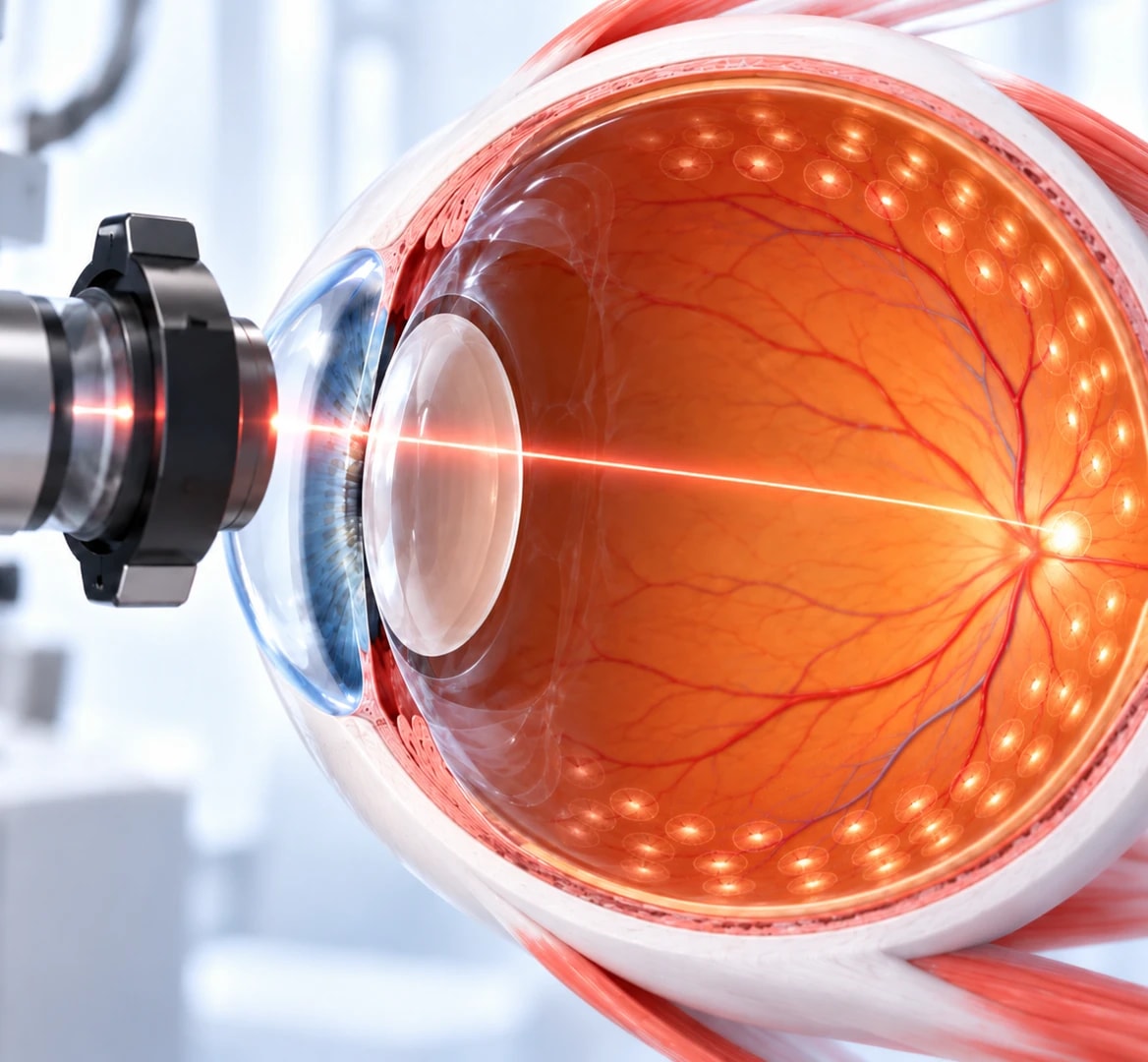
  • Cross-section illustration of a laser sealing the area around a retinal tearCross-section illustration of a laser sealing the area around a retinal tear

    Laser Treatment for Retinal Tears

    If a hole or tear is found, the surrounding area
    is sealed with a laser to prevent it from progressing to detachment.
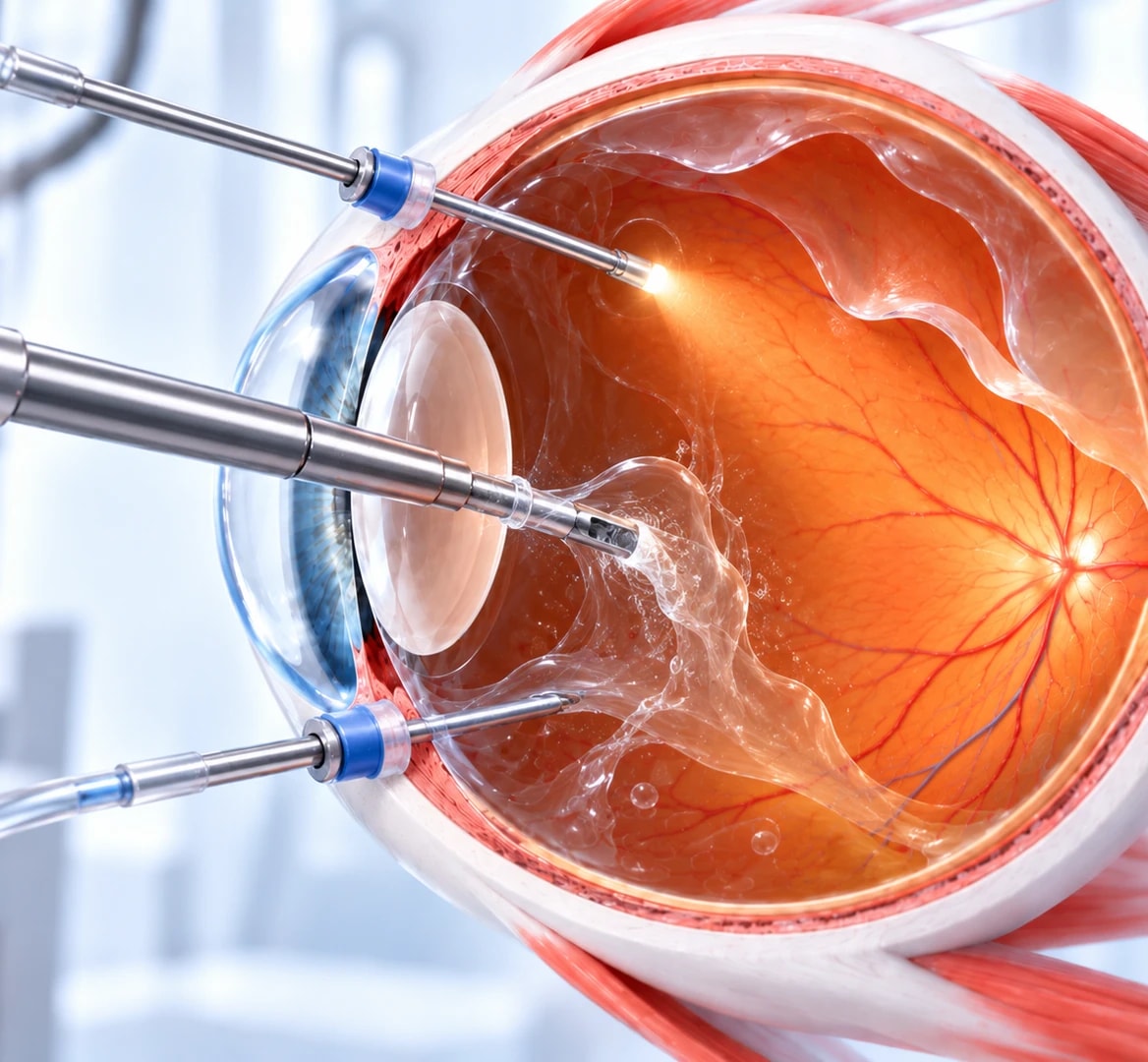
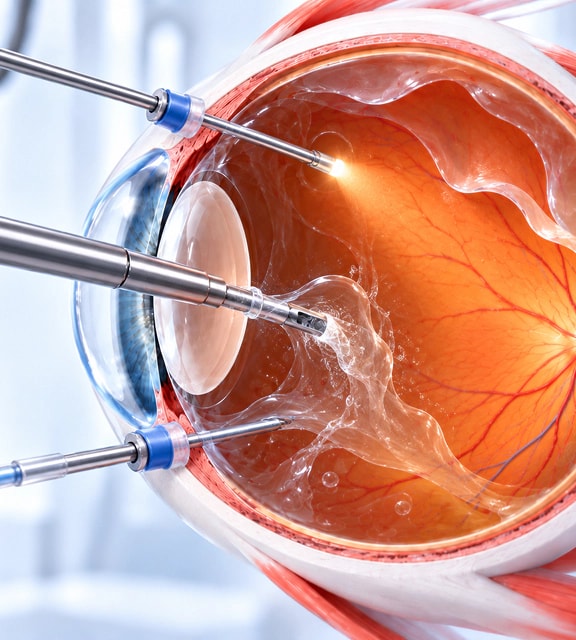
  • Cross-section illustration of surgical instruments removing the vitreousCross-section illustration of surgical instruments removing the vitreous

    Vitrectomy

    If the retina has detached, surgery may be performed to remove the vitreous
    and reattach the retina in its original position.
  • Illustration of scleral buckling with a silicone band around the outside of the eyeIllustration of scleral buckling with a silicone band around the outside of the eye

    Scleral Buckling

    A surgical method that uses a silicone band or similar on the outside of the eye
    to support the torn area and reattach the retina.

Retinal detachment care starts with an accurate exam

After precisely checking the retina and the extent of damage,
we choose the treatment that suits your eye.

Frequently Asked Questions

You may notice a sudden increase in floaters, flashes of light (photopsia), or part of your vision being blocked as if by a curtain or shadow.

Not all floaters mean retinal detachment. However, if floaters suddenly increase or appear together with flashes or a curtain over your vision, it is best to be checked for a retinal tear or detachment.

At the retinal tear stage, laser treatment can help prevent progression to detachment. If the retina has already detached, surgery may be needed depending on the extent and condition of the detachment.

As retinal detachment progresses it can seriously damage vision and the visual field, so if you have suspicious symptoms it is important to be examined quickly and receive appropriate treatment.

High myopia is one of the risk factors for retinal detachment. Especially if sudden floaters or flashes appear, it is best to have your retina checked.

Yes. Even after treatment, regular follow-up is needed to monitor the retina and check for recurrence.
+82-10-3435-5770

Closed on Sundays

Weekdays (Mon–Fri)
09:30 - 18:00
Saturday
09:30 - 17:00
Lunch Break
13:00 - 14:00
Business Name
BGN Eye Clinic Jamsil
Representative
Park Se-kwang
Business Registration No.
110-99-05290
Address
11F Lotte World Tower, 300 Olympic-ro, Songpa-gu, Seoul
Main Phone
1600-5770
Privacy Officer
Heo Seo-yun

Chat