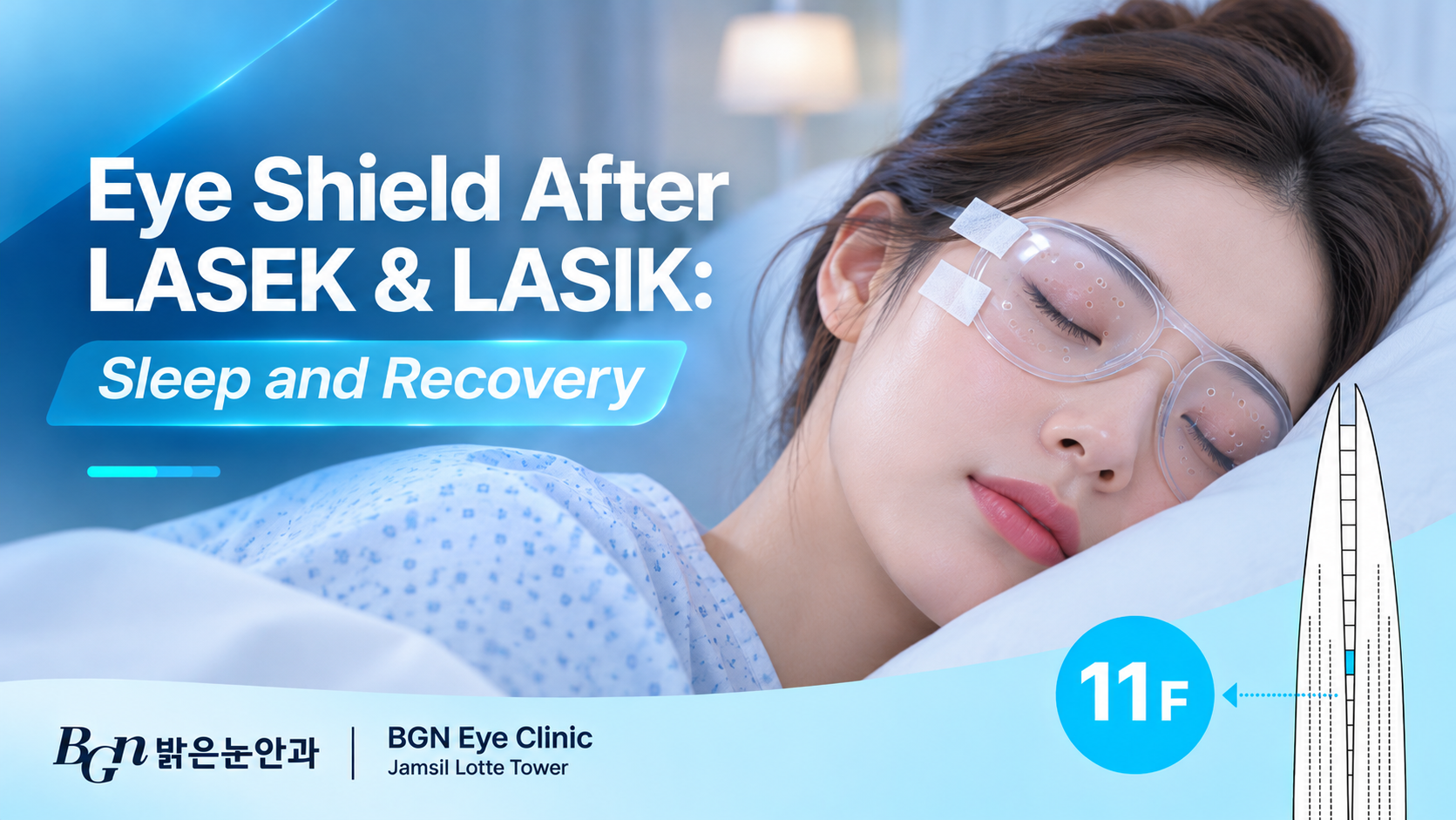
Eye Shield After LASEK & LASIK: Sleep and Recovery | BGN Eye Clinic
BGN EYE HEALTH & VISION CORRECTION GUIDE
Do You Need an Eye Shield After LASEK or LASIK? A Sleep and Recovery Guide
Understanding Protective Eye Shields, Sleeping Positions and Postoperative Eye Care
BGN Eye Clinic | Jamsil Lotte World Tower
BGN MEDICAL TEAM
BGN Eye Clinic Jamsil
Ophthalmology & Refractive Surgery
BGN Eye Clinic provides comprehensive ophthalmic examinations, individualized vision correction consultations and postoperative guidance based on each patient's eye condition, surgical procedure and recovery needs.
Learn More About BGN Eye Clinic →Q. Do you need to wear an eye shield while sleeping after LASEK or LASIK?
A. A protective eye shield can help prevent accidental rubbing and pressure during sleep after vision correction surgery. Wear it for the period recommended by your ophthalmologist, as postoperative requirements vary by procedure and healing progress.
01. Why Does Sleeping Position Matter After LASEK and LASIK?
Hello from BGN Eye Clinic at Jamsil Lotte World Tower.
Before undergoing vision correction surgery, patients often ask how carefully they need to sleep afterward and whether wearing a protective eye shield is necessary.
Adequate rest is an important part of recovery following LASIK, LASEK and SMILE. However, the eyes may be particularly sensitive during the initial postoperative period.
During sleep, patients may unintentionally rub their eyes, touch their face or press the eye area against pillows and bedding. These movements can expose the healing eyes to unnecessary friction or pressure.
Why Protecting Your Eyes During Sleep Matters
- Reducing accidental rubbing of the healing corneal surface.
- Limiting direct pressure from pillows and bedding.
- Helping protect the bandage contact lens used after LASEK.
- Avoiding unnecessary contact with the healing corneal flap after LASIK.
- Reducing the likelihood of unintended contact with the operated eyes.
For these reasons, BGN Eye Clinic emphasizes appropriate sleep habits and postoperative eye protection alongside adequate rest during recovery.
02. Why Is an Eye Shield Recommended After LASEK?
LASEK, or Laser-Assisted Subepithelial Keratectomy, is a surface laser vision correction procedure that involves the corneal epithelium, the outermost layer of the cornea.
Because the epithelial surface requires time to heal after treatment, the initial recovery period is generally longer than that of conventional LASIK. A therapeutic bandage contact lens may be placed over the cornea during this period.
PROTECTIVE PURPOSE 01
Helps Prevent Unconscious Eye Rubbing
Temporary dryness, itching or irritation may cause patients to touch or rub their eyes without fully waking during sleep.
A properly fitted rigid eye shield creates a physical barrier between the hands and the operated eye, helping reduce accidental contact during the early recovery period.
PROTECTIVE PURPOSE 02
Helps Protect Against Pillows and Bedding
During sleep, the face may come into contact with pillows, blankets or other bedding without the patient noticing.
A protective eye shield can help limit direct contact with the eye area. However, patients should still avoid sleeping positions that place pressure on the operated eyes.
Eye Shield vs. Bandage Contact Lens: What Is the Difference?
| Protective Device | Purpose |
|---|---|
| Rigid Eye Shield | Worn externally over the eye area to help prevent unintended rubbing, pressure and contact. |
| Bandage Contact Lens | Placed directly on the cornea by the medical team to protect the healing epithelial surface after LASEK. |
| Soft Sleep Mask | Designed primarily to block light. It is not a substitute for a rigid protective eye shield prescribed after surgery. |
03. Eye Protection After LASEK, LASIK and SMILE
Although LASEK, LASIK and SMILE are all vision correction procedures, their surgical approaches and early recovery requirements differ. Postoperative eye protection should therefore be tailored to the procedure performed and the patient's clinical condition.
| Category | LASEK | LASIK | SMILE |
|---|---|---|---|
| Surgical Approach | Surface laser ablation | Laser treatment beneath a corneal flap | Lenticule extraction through a small incision |
| Main Healing Consideration | Corneal epithelial recovery | Corneal flap healing | Incision and corneal tissue recovery |
| Bandage Contact Lens | Commonly used | Not routinely required in uncomplicated cases | Not routinely required in uncomplicated cases |
| Sleeping With an Eye Shield | As recommended by your surgeon | As recommended by your surgeon | According to individual postoperative instructions |
| Eye Rubbing | Avoid | Avoid | Avoid |
After LASIK, avoiding direct pressure and rubbing is particularly important because accidental trauma may affect the healing corneal flap.
SMILE does not involve creating a conventional LASIK-style flap. Nevertheless, patients should continue protecting their eyes from unnecessary rubbing, pressure and impact throughout the recovery period recommended by their surgeon.
04. Five Recommended Sleep Habits During Recovery
Sleeping after vision correction surgery does not need to be unnecessarily stressful. A few practical adjustments may help patients rest comfortably while limiting avoidable contact with the operated eyes.
SLEEP TIP 01
Sleep on Your Back When Possible
Sleeping on your back may help reduce direct contact between the operated eyes and surrounding pillows or bedding.
This position may be particularly practical during early recovery, provided it is comfortable and compatible with your individual medical needs.
SLEEP TIP 02
Avoid Direct Eye Pressure When Sleeping on Your Side
Patients who prefer sleeping on their side should choose a position that does not press the operated eye against the pillow.
Avoid lying face down or placing unnecessary pressure on the eye area. Follow any specific sleeping-position restrictions provided by your surgeon.
SLEEP TIP 03
Choose a Comfortable and Supportive Pillow
Use a pillow that comfortably supports your head and neck without pushing against your eyes.
There is no universal pillow height or design required after laser vision correction. The main consideration is avoiding direct contact and pressure on the operated eye area.
SLEEP TIP 04
Wear the Protective Eye Shield Recommended by Your Clinic
If your surgeon recommends a rigid protective eye shield, wear it according to the instructions provided by your medical team.
The shield should be positioned securely without pressing directly on the eye or eyelids.
Ordinary soft sleep masks are designed primarily for blocking light and should not replace a prescribed rigid protective eye shield.
SLEEP TIP 05
Remember Eye Protection During Daytime Naps
Accidental eye rubbing can occur during daytime naps as well as nighttime sleep.
If your ophthalmologist recommends wearing an eye shield whenever you sleep, remember to use it during naps throughout the prescribed postoperative protection period.
05. How Long Should You Wear an Eye Shield After LASEK or LASIK?
The recommended duration of protective eye shield use varies depending on the surgical procedure, corneal healing, individual risk factors and your ophthalmologist's postoperative protocol.
Some patients may be instructed to wear a shield during the first several nights, while others may require a longer protection period. The absence of pain or discomfort does not necessarily mean that the eyes have fully recovered.
STAGE 01 · SURGERY DAY
The First Night After Surgery
Rest in a comfortable environment and wear the protective eye shield if instructed. Avoid rubbing, pressing or touching the operated eyes unnecessarily.
STAGE 02 · EARLY RECOVERY
The Following Days
Continue using the eye shield during sleep for the duration specified by your surgeon. Patients recovering from LASEK should also follow instructions concerning the therapeutic bandage contact lens and its removal.
STAGE 03 · CONTINUED RECOVERY
When Eye Shield Use Is No Longer Required
Discontinue postoperative eye shield use according to your ophthalmologist's instructions. Continue avoiding unnecessary eye rubbing and follow any remaining recovery precautions.
“Surgery ends at the clinic, but recovery continues at home.”
Appropriate postoperative habits, prescribed medications and scheduled follow-up examinations remain important throughout the healing process.
06. When Should You Contact Your Eye Doctor?
Temporary dryness, irritation and a foreign-body sensation may occur during recovery after laser vision correction. However, unusual or worsening symptoms should not be dismissed as part of normal healing.
Potential Risks and Side Effects of Vision Correction Surgery
LASEK, LASIK and SMILE involve potential risks and side effects, including postoperative discomfort, dry eyes, glare, halos, fluctuating vision, residual refractive errors, inflammation and infection.
Procedure-specific complications may include delayed epithelial healing or corneal haze after LASEK, flap-related complications after LASIK and corneal interface complications after SMILE.
Additional treatment may be necessary in some cases, and serious complications, including vision loss, are possible. Protective eye shields cannot prevent every complication or guarantee a particular recovery outcome.
Key Takeaways: Sleeping After Vision Correction Surgery
01. Wear Your Recommended Eye Shield
A properly fitted protective eye shield may help reduce accidental rubbing and direct contact during sleep.
02. Avoid Direct Pressure on Your Eyes
Sleep on your back when comfortable, or choose a side-sleeping position that keeps your eyes free from pillow pressure.
03. Protect the Bandage Contact Lens After LASEK
Never remove, adjust or reinsert a therapeutic bandage contact lens yourself. Contact your clinic if it becomes displaced.
04. Remember Daytime Naps
Use the protective eye shield during naps as well as nighttime sleep when instructed by your ophthalmologist.
05. Follow Individualized Recovery Instructions
Eye shield wearing periods and postoperative precautions vary according to the surgical procedure and individual healing progress.
06. Seek Medical Advice When Necessary
Severe pain, worsening vision, significant redness or symptoms following accidental eye injury require prompt ophthalmic assessment.
Conclusion: Protecting Your Eyes While You Sleep
Wearing a protective eye shield may feel unfamiliar at first, but it can provide practical protection during the early stages of recovery when patients may unknowingly rub their eyes or press them against pillows and bedding.
Appropriate sleep habits, prescribed eye drops and regular postoperative examinations are important components of recovery after LASIK, LASEK and SMILE.
Rather than assuming that the same postoperative precautions apply to every vision correction procedure, follow the specific instructions provided by your ophthalmologist.
For further questions about sleeping after vision correction surgery, protective eye shields or postoperative recovery, please contact BGN Eye Clinic, Jamsil Lotte World Tower. Our medical team can provide guidance based on your individual surgical procedure and eye condition.
References & Further Reading
- U.S. Food and Drug Administration (FDA). What Should I Expect Before, During, and After Surgery? Official patient guidance regarding LASIK recovery, postoperative eye protection, corneal flap healing and precautions against accidental rubbing or pressure. Read the FDA LASIK Recovery Guide
- Hong Kong Sanatorium & Hospital, Department of Ophthalmology. Laser-Assisted Subepithelial Keratectomy (LASEK). Clinical patient information regarding LASEK, bandage contact lens management, protective eye shields and postoperative precautions during sleep. Read the LASEK Postoperative Care Guide